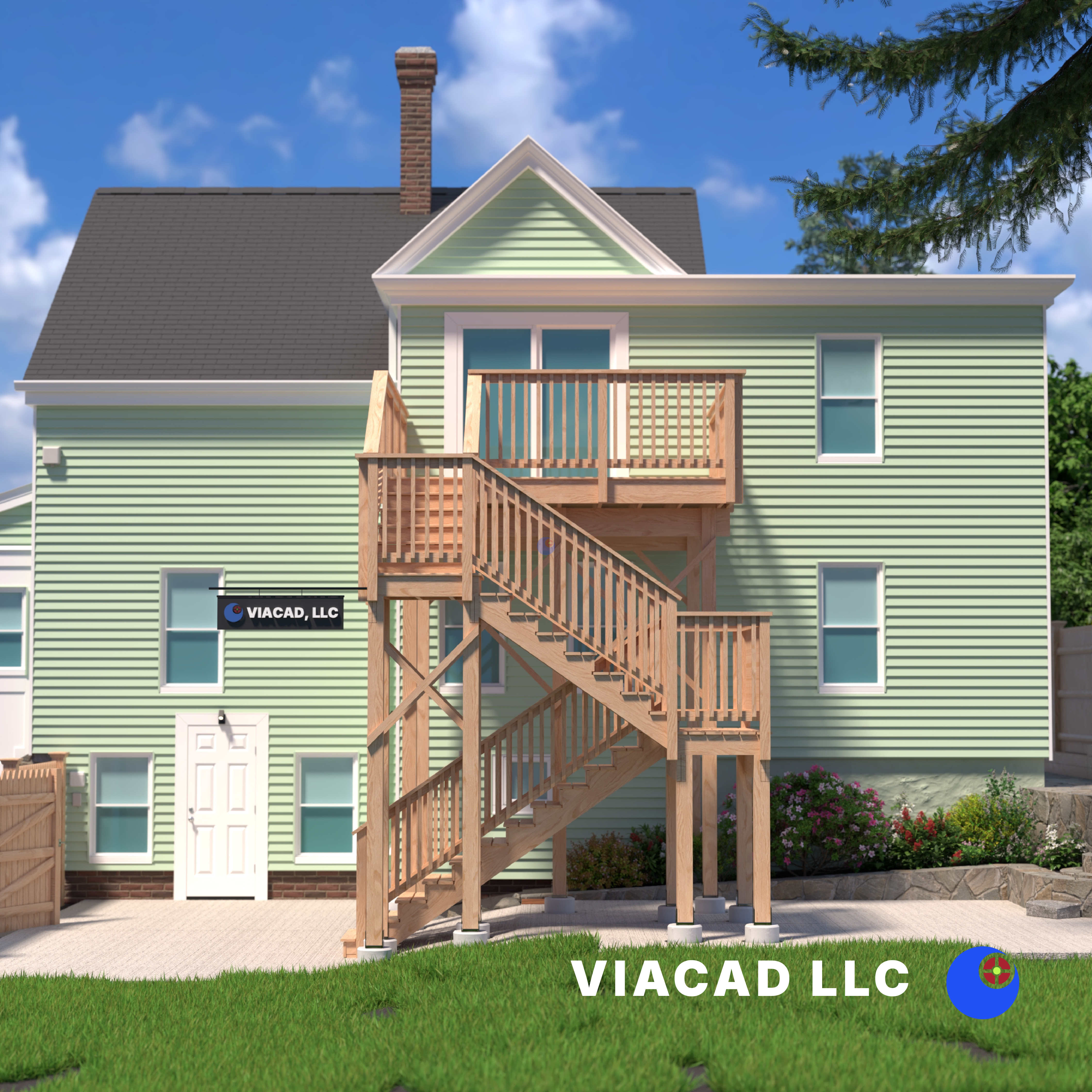
Yes, in most cases, you can build an ADU in Worcester.
Massachusetts has made it significantly easier by allowing one accessory dwelling unit on residential properties by right in many situations. That means you often don’t need a special permit just to move forward.
But that doesn’t mean every property works. Most projects fail not because they’re illegal, but because they don’t meet the physical or code requirements once you actually break it down.
An ADU, or accessory dwelling unit, is a fully independent living space located on the same property as your main home. It includes its own entrance, kitchen, bathroom, and sleeping area.
In Worcester, these typically take one of four forms: a finished basement, a converted garage, an attached addition, or a detached unit in the backyard.
On paper, they all qualify. In reality, each one comes with different constraints that determine whether it can actually be built.
The reason you’re hearing more about ADUs now is simple. The barrier to entry dropped.
In the past, many homeowners needed special permits or faced zoning restrictions that made projects unpredictable. Now, the state has opened the door in a way that shifts the problem.
It’s no longer about whether you’re allowed to build. It’s about whether your property can support it.
That’s a completely different problem, and it’s where most people get stuck.
Worcester generally permits one ADU on a residential property, as long as there is already an existing home on the lot. You are limited to a single unit, and it must remain under the same ownership as the main house, meaning it cannot be split off and sold separately.
There are also size constraints. The ADU cannot exceed 900 square feet or 50 percent of the main home, whichever is smaller. That forces efficient layouts and eliminates oversized additions pretending to be secondary units.
Parking requirements are often flexible, but you still cannot eliminate required existing parking. This becomes a constraint on tighter properties, especially when converting garages.
Even though ADUs are allowed, the project still needs to go through the full permitting process. That includes building permits, structural review when necessary, and compliance with fire, electrical, plumbing, and life safety codes.
This is where most projects either move forward or collapse.
This is where people waste time.
They assume that because ADUs are allowed, they can build one. Then they get into design or talk to contractors, only to realize later that something fundamental doesn’t work.
There are five areas that determine whether your project is viable.
The first is setbacks and lot constraints. Even if ADUs are allowed, your property still has to respect required distances from property lines and lot coverage limits. Detached units fail here constantly.
The second is layout feasibility. You need to fit a functional unit that meets code. That includes proper circulation, legal egress, and usable living space. Many basement and garage ideas look good until you try to make them legal.
The third is ceiling height. This is a major issue in basement conversions. If the ceiling is too low, you either abandon the project or take on expensive structural modifications.
The fourth is structural condition. Older homes and garages often require reinforcement, especially when you start cutting openings, adding loads, or changing use. This is where costs start climbing fast.
The fifth is utilities. Plumbing, electrical capacity, heating, and ventilation all need to support a second unit. If the connections are not straightforward, complexity and cost increase immediately.
These are the filters that matter. Not the headline that says ADUs are allowed.

Costs vary widely based on the type of project and the existing conditions of the property.
A basement or garage conversion might fall somewhere between $70,000 and $160,000 if conditions are favorable. A detached ADU can easily range from $140,000 to $280,000 or more depending on size, utilities, and site work.
The key point is this: this is not a small upgrade. It is a real estate investment.
For many property owners, the answer is yes, but only if the numbers make sense.
A typical one-bedroom unit in Worcester can generate around $1,200 to $1,600 per month in rent. That creates a second income stream on a property you already own, while also increasing its overall value.
But this only works if the project is designed efficiently and built correctly. Poor layouts, excessive costs, or failed approvals kill the return.
There are situations where the project should not move forward.
If the lot is too constrained, the setbacks eliminate buildable space. If the basement cannot meet code requirements, the cost to fix it may not be worth it. If there is no viable egress solution, the unit cannot be approved. If the structure is in poor condition, reinforcement may push the project out of budget.
And if the numbers don’t work financially, then it’s not an investment. It’s a liability.
Before you think about design, contractors, or costs, you need to answer one question:
Does your specific property actually work for an ADU?
That requires a proper evaluation of zoning, site constraints, code requirements, and basic layout feasibility. Without that, you’re making decisions blindly.
We focus on getting projects from idea to permit-ready.
That starts with understanding whether your property works, and if it does, how to design it in a way that can actually get approved and built.
Our process includes property analysis, feasibility review, and full construction drawings for permit.
Consultation is $400 and is credited toward your project if you move forward.
Yes, you can build an ADU in Worcester.
But whether you personally can depends entirely on your property, your structure, and your layout.
That’s the difference between an idea and a project that actually gets built.

Currently accepting projects in Massachusetts.